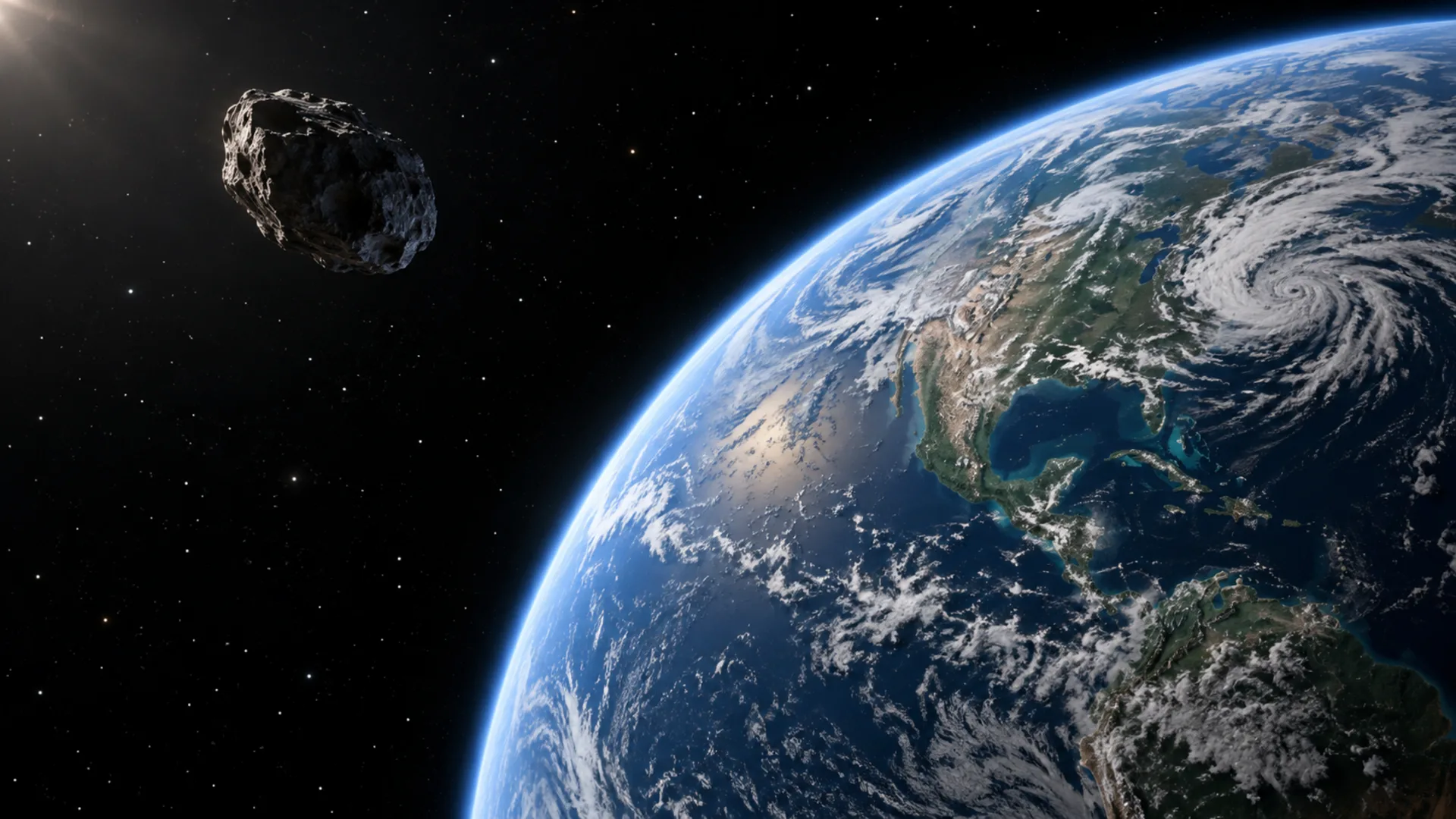
If the Sun vanished right now, the sky would not change immediately. For a little more than eight minutes, Earth would keep receiving the last sunlight — and continue orbiting as if nothing had happened.
The news would arrive late
The distance between Earth and the Sun is so vast that light takes about eight minutes and twenty seconds to cross it. When we look at the Sun, we are not seeing its exact present state; we are seeing a recent image from the past.
That applies to any change that could happen there. First, the information would have to travel through space, and only then would our eyes detect it. The Sun could vanish while you were reading this sentence and still appear in the sky for several minutes.
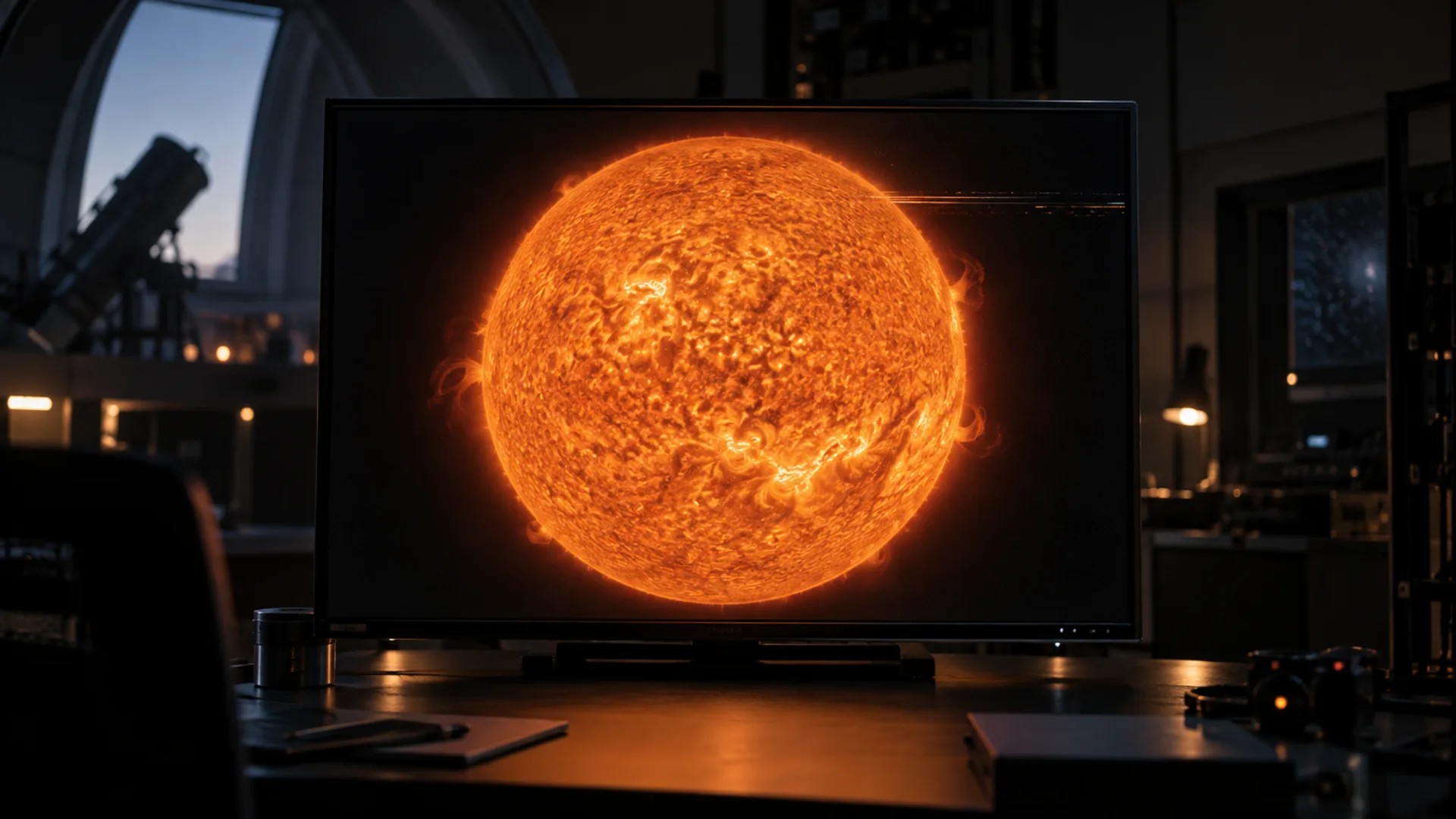
For a few minutes, nothing would look wrong
During that interval, daylight would continue, shadows would point in the same direction and Earth would keep moving along its orbit. There would be no visible wave crossing the sky and no cosmic alarm ringing in the cities.
When the last sunlight finally ended, the change would be immediate from our point of view: the Sun would disappear, taking away the direct light that powers Earth’s climate and life.
Gravity would be delayed too
The least intuitive detail is that gravity would not be noticed before the visual news. In general relativity, changes in a gravitational field propagate at the speed of light. For roughly eight minutes, Earth would continue feeling the Sun’s attraction.
After that, in the imaginary scenario where the Sun simply ceased to exist, Earth would not fall downward. It would stop curving around the Sun and travel approximately in a straight line, tangent to its former path.

Earth would not freeze instantly
Darkness would arrive quickly, but complete freezing would not. The atmosphere, oceans and ground store heat, so temperatures would fall gradually. Plants might survive for a while on stored energy, but photosynthesis would stop once the light was gone.
Over weeks and months, the surface would become increasingly cold. Parts of the ocean could remain protected beneath ice and geothermal heat, but the balance that supports surface life would be destroyed.
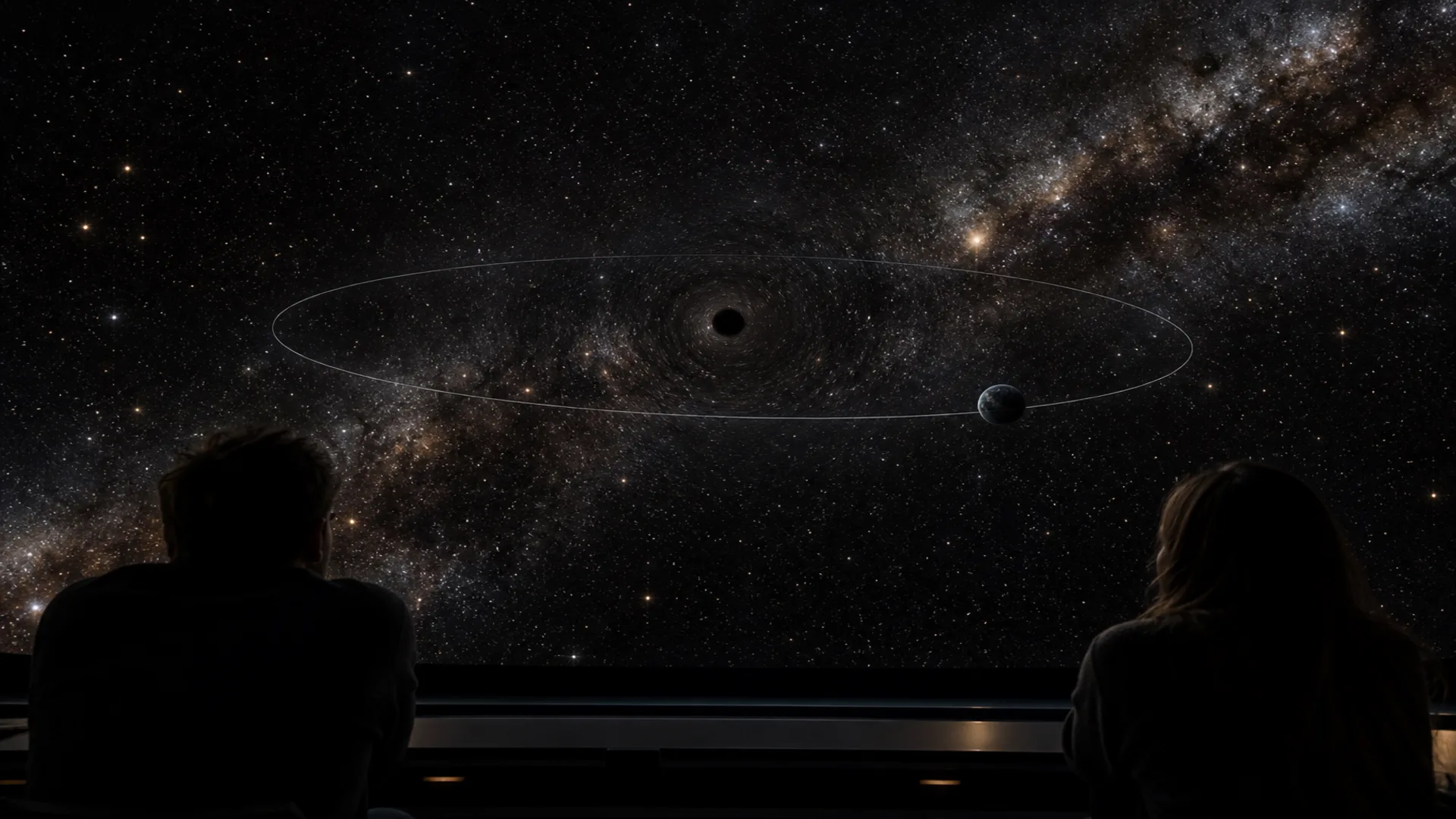
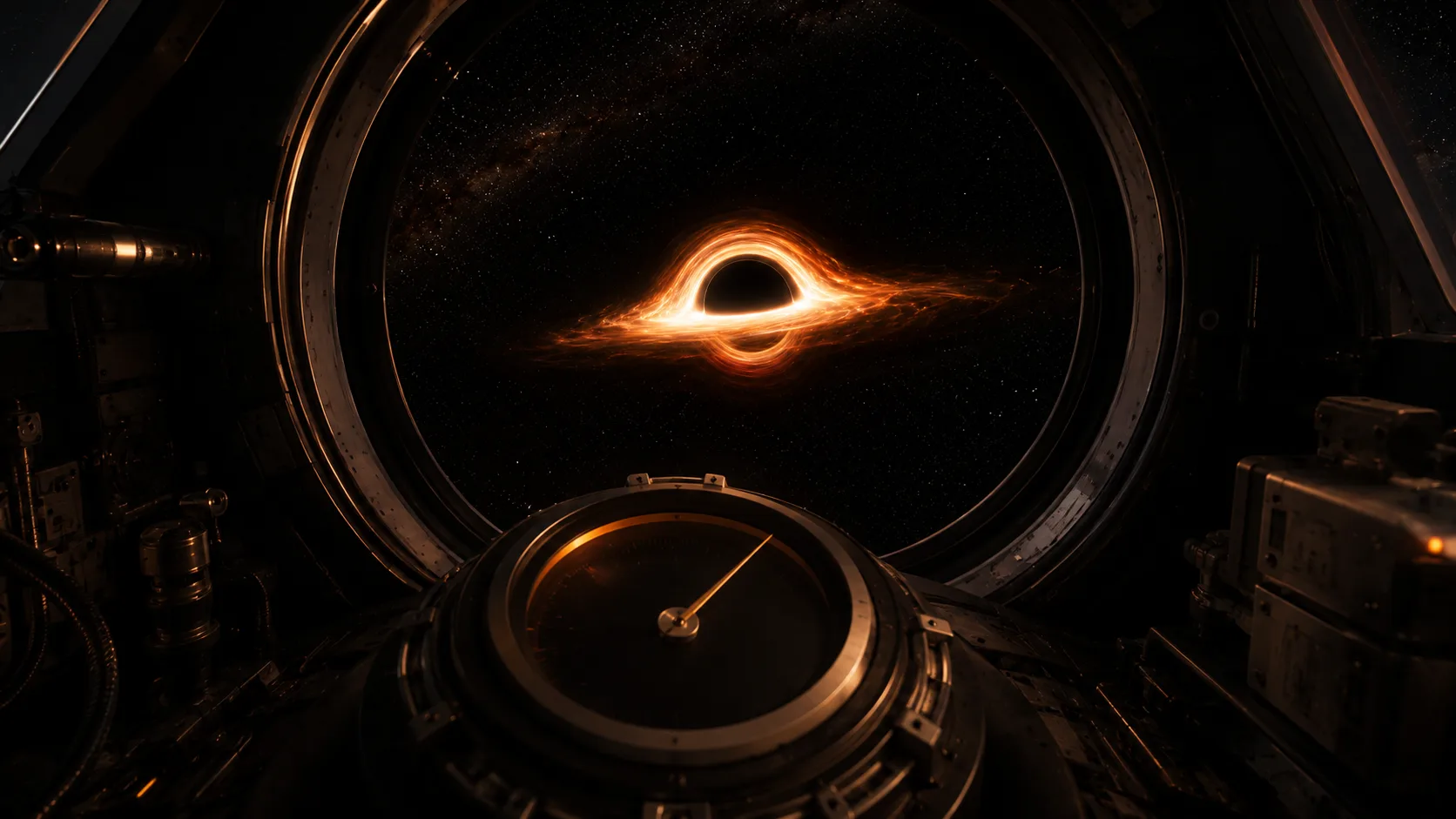
What if the Sun became a black hole?
That is a different hypothesis, but it helps separate two effects that are often confused. If the Sun were instantly replaced by a black hole with exactly the same mass, Earth’s orbit would not change. At a great distance, gravity depends on mass, not on whether the object emits light.
The problem would be the missing energy. Earth would keep orbiting, but without enough light and heat to maintain its current environment. The total disappearance used in this article is different: it would also remove the mass guiding the orbit.
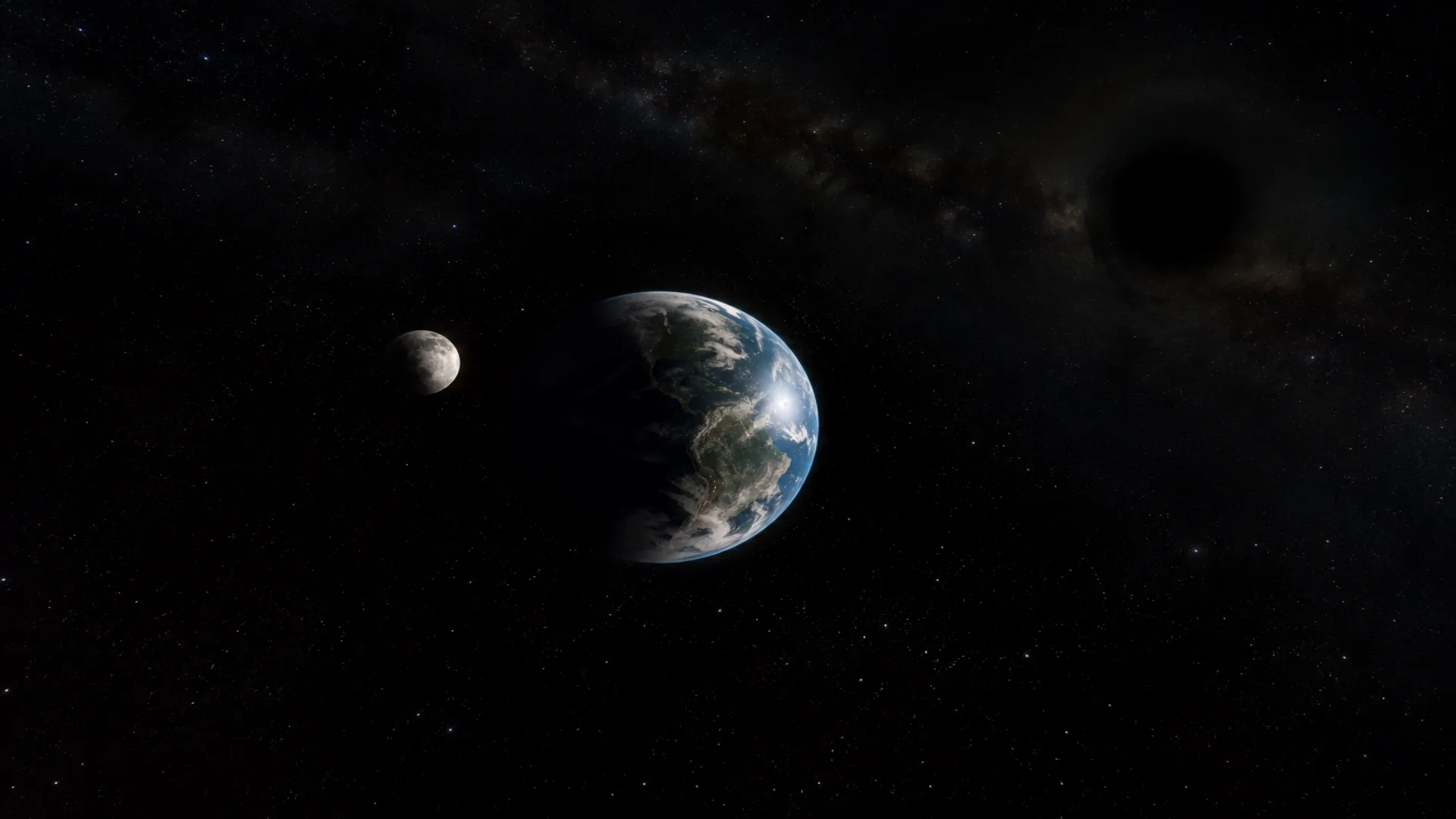
The short answer
Earth would not notice the Sun’s disappearance immediately. About eight minutes and twenty seconds of normal daylight would pass; then the sky would go dark and the Sun’s gravitational influence would stop shaping Earth’s orbit. Darkness would arrive before freezing, but the loss of sunlight would begin a profound planetary transformation.
Frequently asked questions
Would we see the Sun vanish at the same moment it disappeared?
No. We would see the last light emitted before the disappearance and receive that information about eight minutes and twenty seconds later.
Would Earth fall downward?
There is no universal “down” pointing toward the Sun. Without the force curving its path, Earth would travel approximately in a straight line tangent to its former orbit.
Would Earth freeze immediately?
No. The surface would lose energy gradually because oceans, atmosphere and ground retain heat. Darkness would be immediate, but cooling would progress over time.