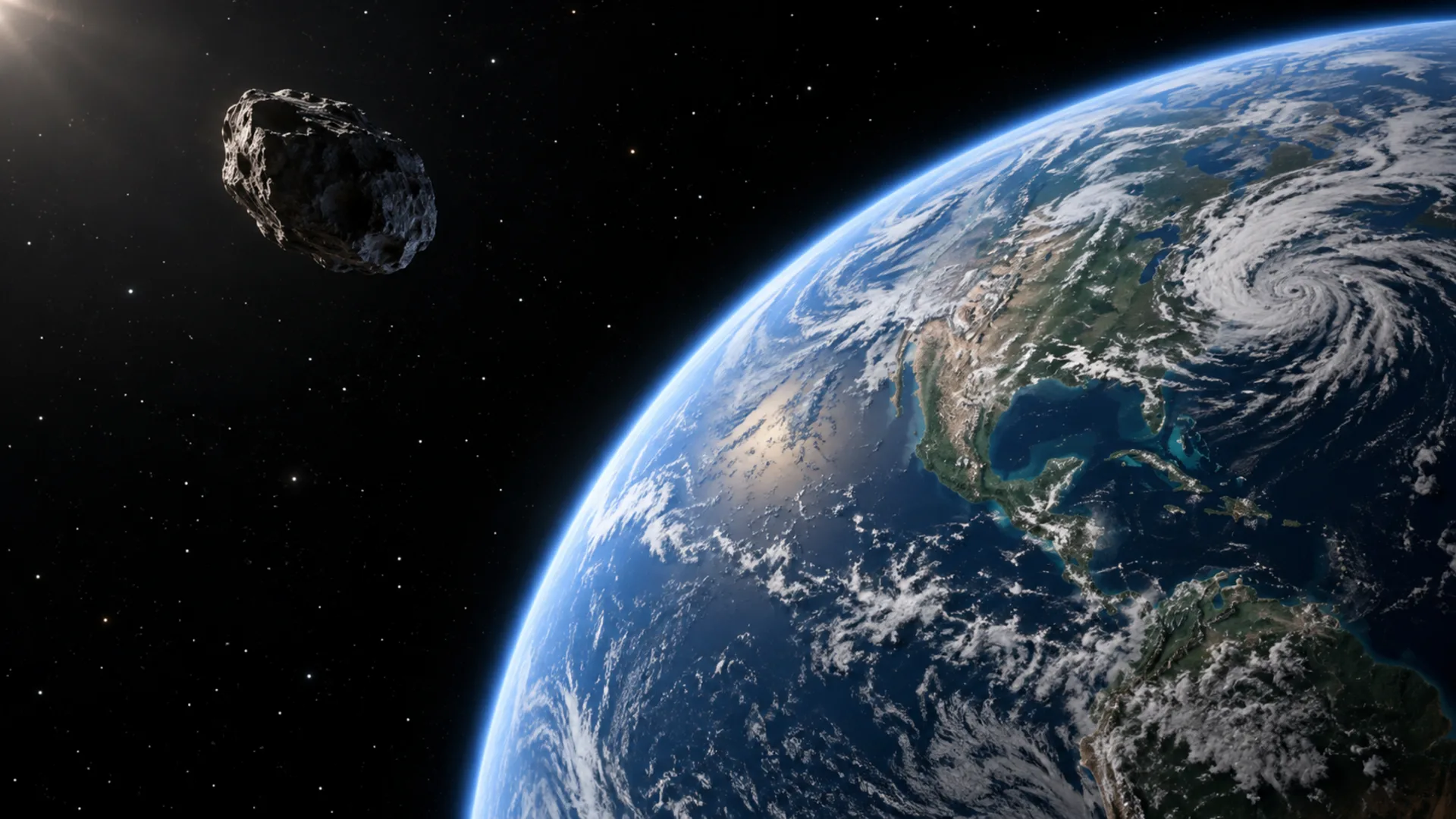
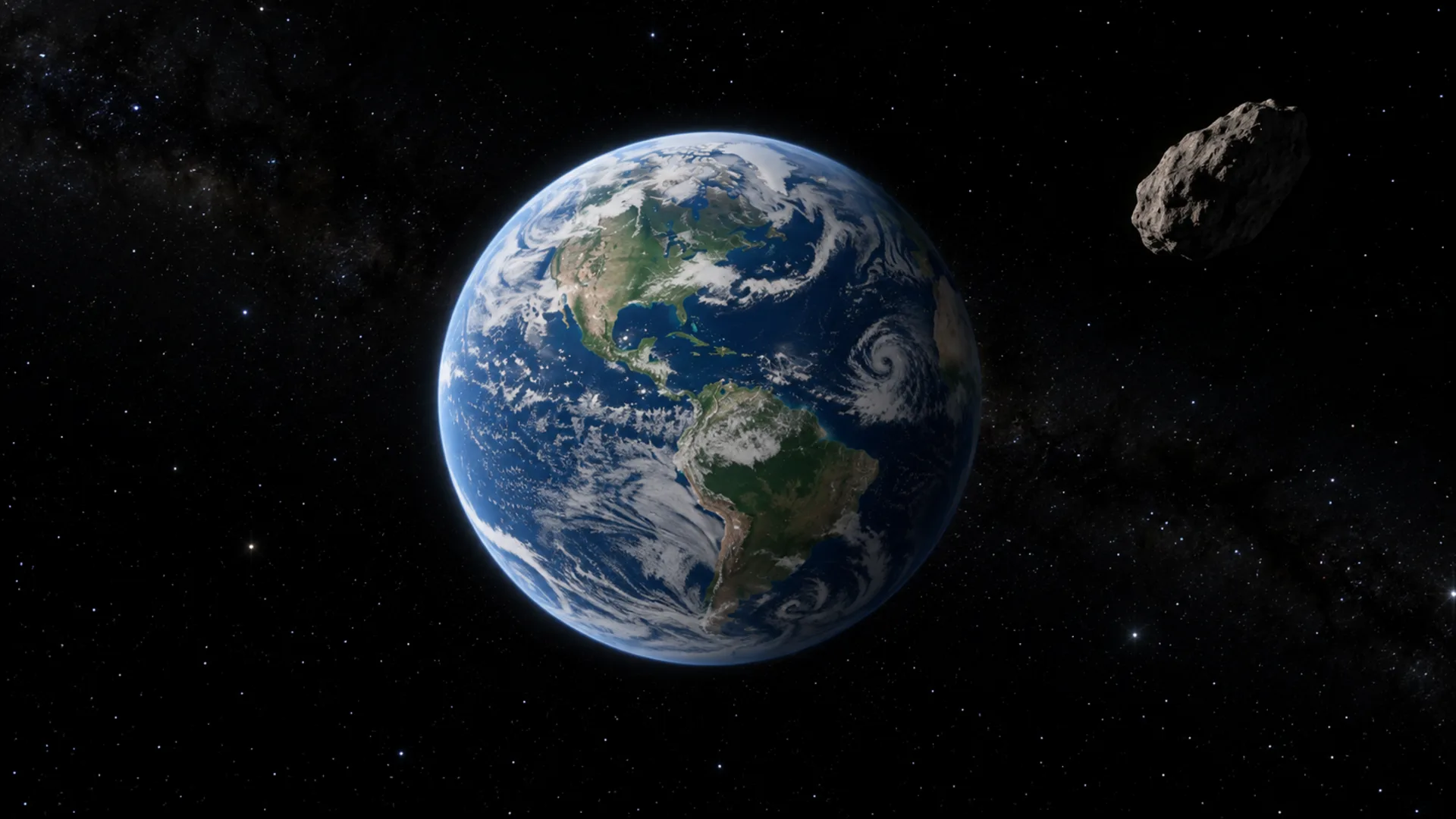
If an asteroid were discovered on a collision course with Earth, the first image that came to mind might be a spectacular explosion. The smarter solution could be much quieter: give the asteroid a tiny push while there are still many years left before the encounter.
The alarm would not begin with a countdown
The first task would be to confirm that the object is really an asteroid, estimate its size, and track its position long enough to calculate its orbit. One observation cannot tell us exactly where the object will be years from now. The path has to be refined with new measurements.
Astronomers would also calculate the region of uncertainty. Even when a projected path appears to cross Earth, small measurement errors can change the result. Before launching anything, scientists would need to establish whether a collision is genuinely likely and when it could occur.
Why can a small push be enough?
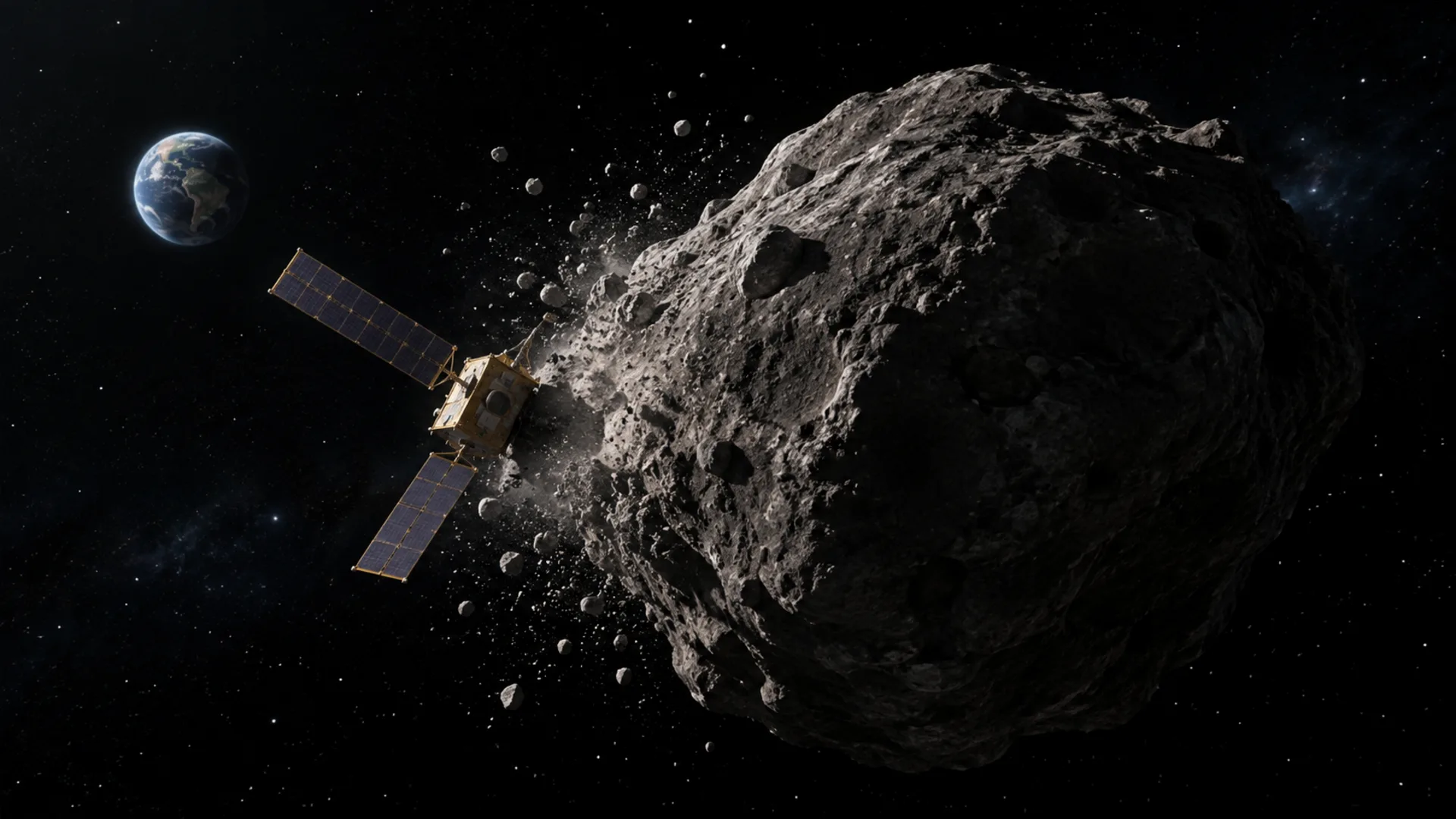
An asteroid does not have to be stopped to miss Earth. A slight change in speed or direction may be enough. The change seems insignificant at the moment of intervention, but it accumulates over years of travel.
Imagine a pool shot that misses the center of the ball by a fraction. Near the cue, almost nothing seems different; after crossing the table, the ball misses the pocket entirely. In space, the table is an enormous orbit and the pocket is Earth.
The mission that tested the idea
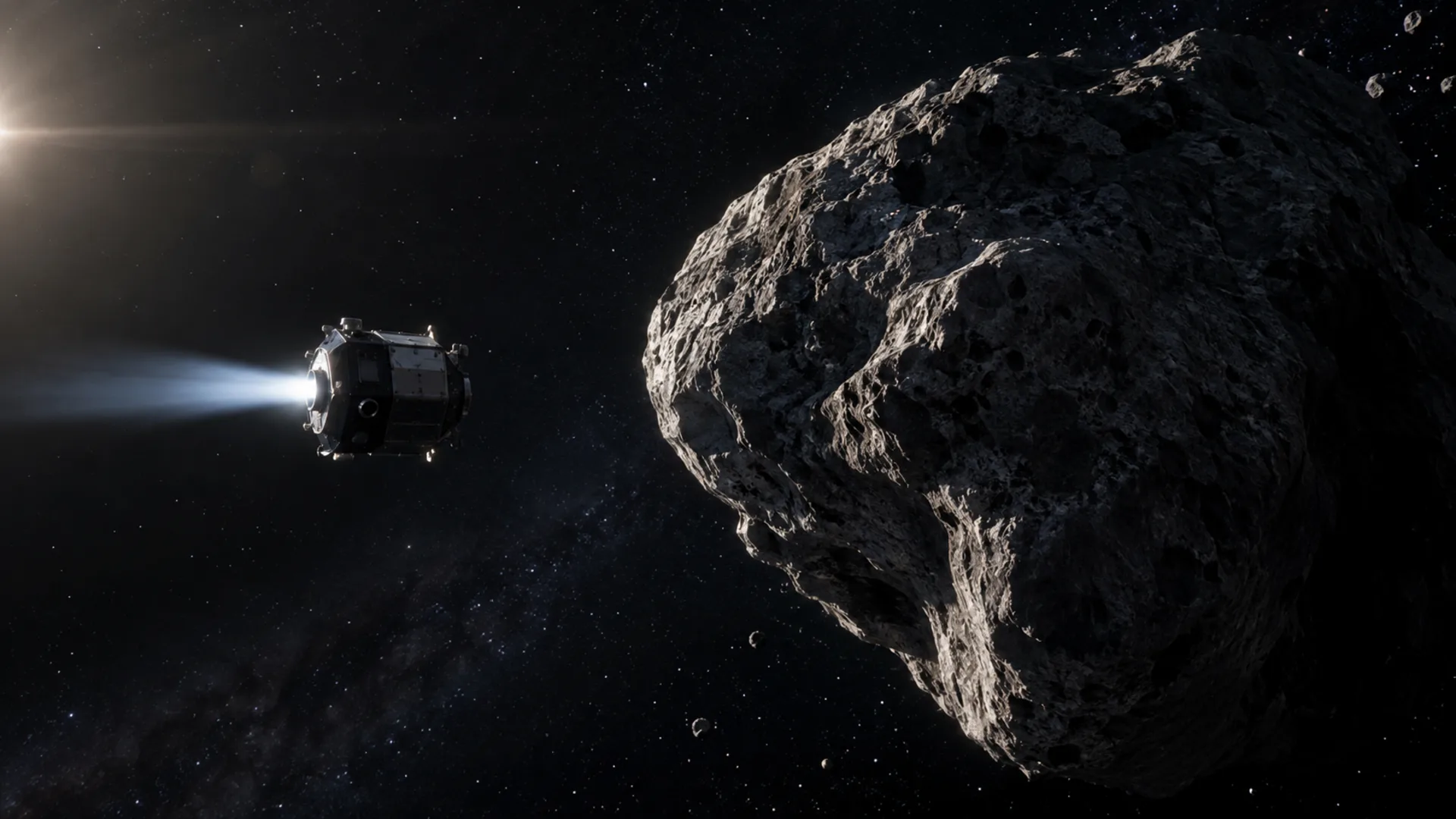
In 2022, NASA’s DART mission deliberately crashed into Dimorphos, a small moon of the asteroid Didymos. The goal was not to destroy the system, but to test whether a spacecraft could change its orbit.
It worked: Dimorphos’s orbital period changed by several minutes. That does not mean one spacecraft could deflect every asteroid. It does show that a kinetic impact is a real, measurable planetary-defense technique.
The plan would depend on the warning time
If the discovery came decades before a possible impact, a tiny velocity change might be enough. If the warning arrived only months before the encounter, the same technique might not have enough time to create a safe miss.
The asteroid’s size, composition, and rotation would matter too. A solid body may react differently from a loose pile of rubble. That is why a reconnaissance mission could be as important as the deflection mission itself.
Would blowing it up be the first choice?
Not necessarily. An explosion could break the object into several dangerous pieces instead of removing the risk. In extreme scenarios, nuclear methods might be studied, but the answer would depend on the warning time, mass, structure, and detailed calculations.
Other possibilities include a kinetic impact, a gravity tractor that pulls the asteroid very slowly, or methods that alter its surface. No single solution works for every object, and none is an automatic guarantee.
What if the impact still looked likely?
Governments and observatories would have to share data, recalculate the orbit, and decide whether a mission was feasible. Authorities would also prepare plans for the threatened region. That would not mean evacuating the entire planet: the consequences would depend on the object’s size and where it entered or struck.
The most dangerous situation is not simply a large asteroid. It is a late discovery, when the trajectory is already close to Earth and the available deflection options are limited.
The most important answer is to arrive early
There is currently no known asteroid with a confirmed impact on Earth in the near future. Planetary-defense programs still track near-Earth objects and develop methods for reducing the risk of an unexpected discovery.
If a real threat ever appears, the best defense probably will not look like science fiction. It will be a chain of precise observations, fast decisions, and an intervention made long before the encounter.
Frequently asked questions
Could we destroy an asteroid?
In some scenarios, an impact or explosion could fragment it, but destruction is not the same as removing the danger. The fragments could still head toward Earth.
How much warning would we need?
There is no single deadline. The earlier the object is found, the smaller the change may need to be to make it miss Earth.
Did DART save Earth?
No. DART was a controlled test in a system that posed no threat to our planet. It demonstrated a deflection technique, rather than carrying out an emergency operation.