You wake up on Titan beside a disabled spacecraft and a lake of methane. It looks like a cosmic gas station—until you realize that fuel alone cannot start an engine, fill the right tanks, or get you back to Earth.
The lake looks like an escape route. It isn’t that simple.
Titan is the only world besides Earth known to have stable liquids on its surface. Its rivers, lakes, and seas contain mostly liquid methane and ethane, not water. The cycle feels familiar: clouds, rain, and channels carved by flowing liquid. The chemistry, however, is entirely different.

Methane from a lake could be used as fuel in a system designed for it. But a rocket also needs an oxidizer to burn that fuel. And a broken spacecraft does not become flight-ready just because dark liquid is nearby. You would need suitable tanks, pumps, plumbing, power, and a compatible engine.
The air is everywhere, but you still cannot breathe it
Titan’s thick atmosphere is mostly nitrogen, with a smaller amount of methane. That does not make it breathable: nitrogen cannot replace the oxygen a human body needs, and the pressure and composition require a purpose-built suit. Surface temperatures hover around 179 degrees Celsius below zero. Your first resource is not the lake; it is the shelter and power keeping you alive.
The cold also makes water part of the solid landscape. Titan has a water-ice crust, but finding ice is not the same as turning on a tap. You would have to locate an accessible deposit, dig it up, add heat, and process it. The battery for that work may also be the battery keeping your shelter warm and your life-support systems running.

Water and methane are ingredients, not a ready-made rocket
Researchers at NASA’s Glenn Research Center have studied a concept for using local resources on a future mission: collect liquid methane and produce oxygen from water ice using heat and electrolysis. In principle, methane and oxygen could serve as rocket propellant for a return trip. This is an early-stage concept, not a factory tested on Titan or a rescue plan waiting to launch.
That distinction matters. Lake methane does not solve the production and storage of an oxidizer. Ice does not become oxygen without processing and power. Then you would still need to build and test the equipment, keep connections working in extreme cold, and integrate everything with a vehicle capable of launching and following a return trajectory. The shopping list has grown enough to make your wrench consider a career change.

Flying over Titan is not going home
Titan’s dense atmosphere and lower gravity make it an interesting place to study flight. A glider could cross the landscape in a system designed for that purpose. But wings cannot provide the speed needed to reach space. A return would require a launch vehicle, fuel and oxidizer, navigation, and a return system prepared before the crew arrived.
A return spacecraft would also need to survive the trip to Earth and carry the supplies needed along the way. If the ship that brought you is damaged, you might conserve power, protect your shelter, attempt repairs, and restore communications. Building a rocket and refinery alone in an unfamiliar environment is not a plausible emergency plan.
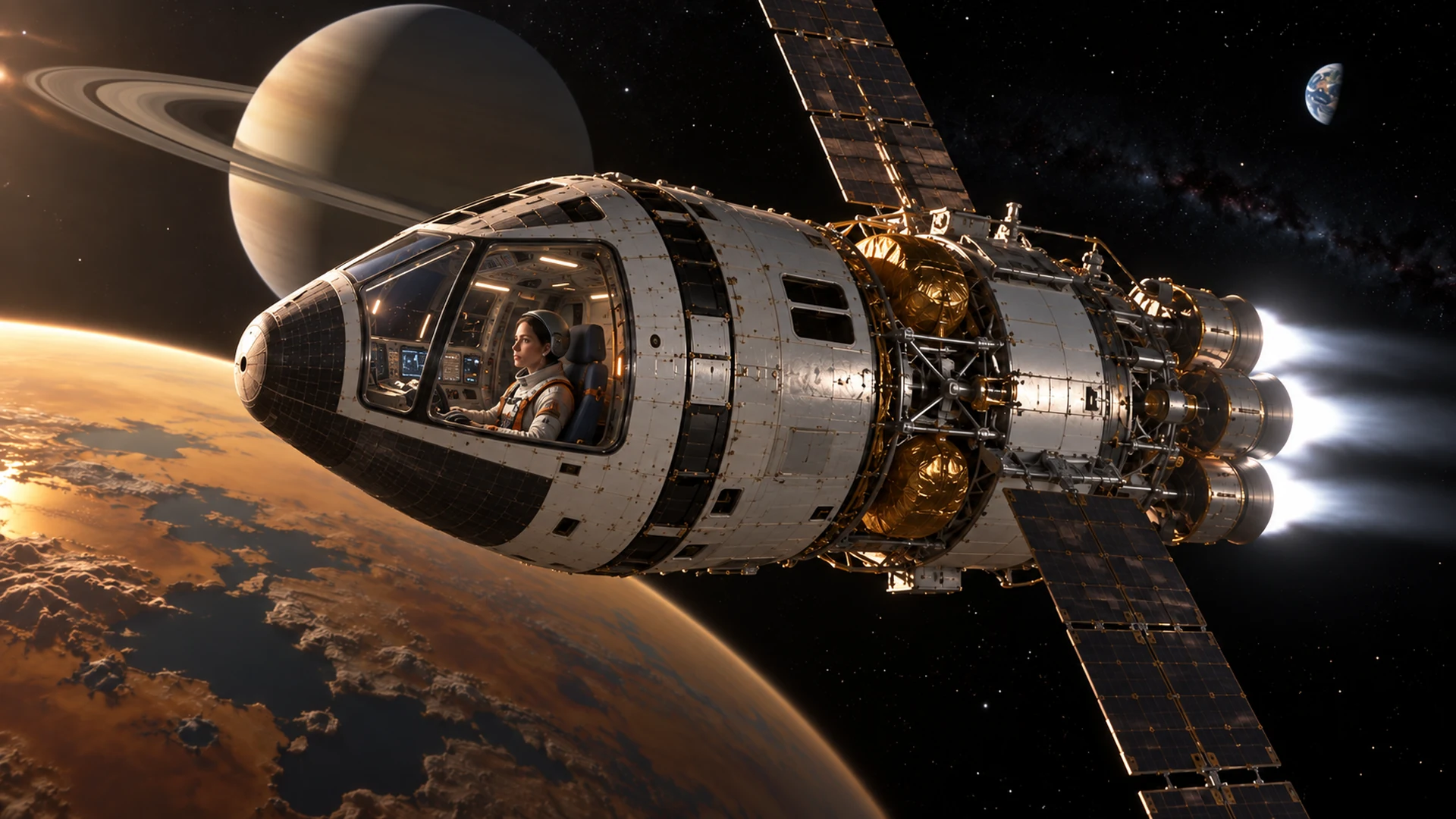
With a working spacecraft—or with manufacturing systems sent and prepared in advance. Titan’s resources might refuel a mission designed to use them, but they cannot guarantee the return of someone stranded with a broken ship. The lake supplies one ingredient; getting home takes the whole kitchen—and a rocket.
Frequently asked questions
Could Titan’s methane be rocket fuel?
Yes, in an engine designed for it and when combined with an oxidizer. A NASA concept study explores local methane and oxygen produced from water ice. It would require machinery, power, and preparation in advance.
Could a person breathe Titan’s atmosphere?
No. The atmosphere is mostly nitrogen and contains only a small amount of methane; it does not provide the breathable oxygen a person needs. A spacesuit and life support would be essential.
Is a mission already going to make fuel on Titan?
No. Researchers have studied concepts for using local resources, but that is not the same as a facility built, tested, or operating on the surface.