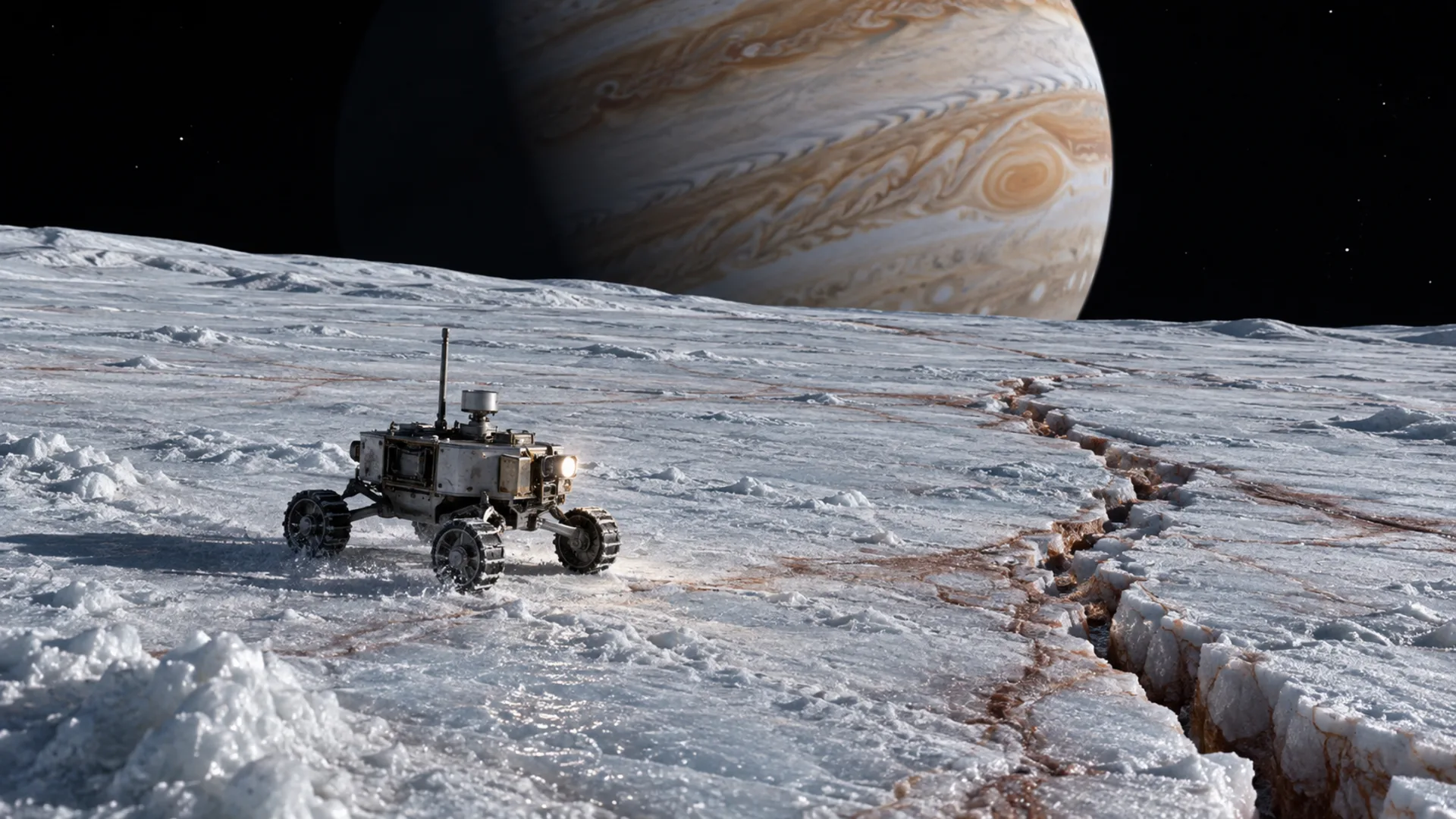
Your suit battery is nearly dead. Outside, a crack in the ice sends steam into a sunless sky. It looks like the perfect way out—until you remember that steam does not come with a power outlet.
First, survive the next few minutes
A rogue planet has been thrown far from its star, so there is no sunrise waiting to warm the surface. Distant stars might still be visible, but they would provide nowhere near enough heat to save a spacesuit. If you have just landed there, cold, isolation, and limited power are your immediate problem.
Running outside to chase a warm spot also uses energy. The heater, instruments, and life support all draw from the same reserve. Your first move is not very cinematic, but it helps: seal the lander, switch off nonessential systems, and reduce the space you need to keep warm.
You still need to reach it, use it safely, and keep life-support systems running.
The planet may keep heat inside
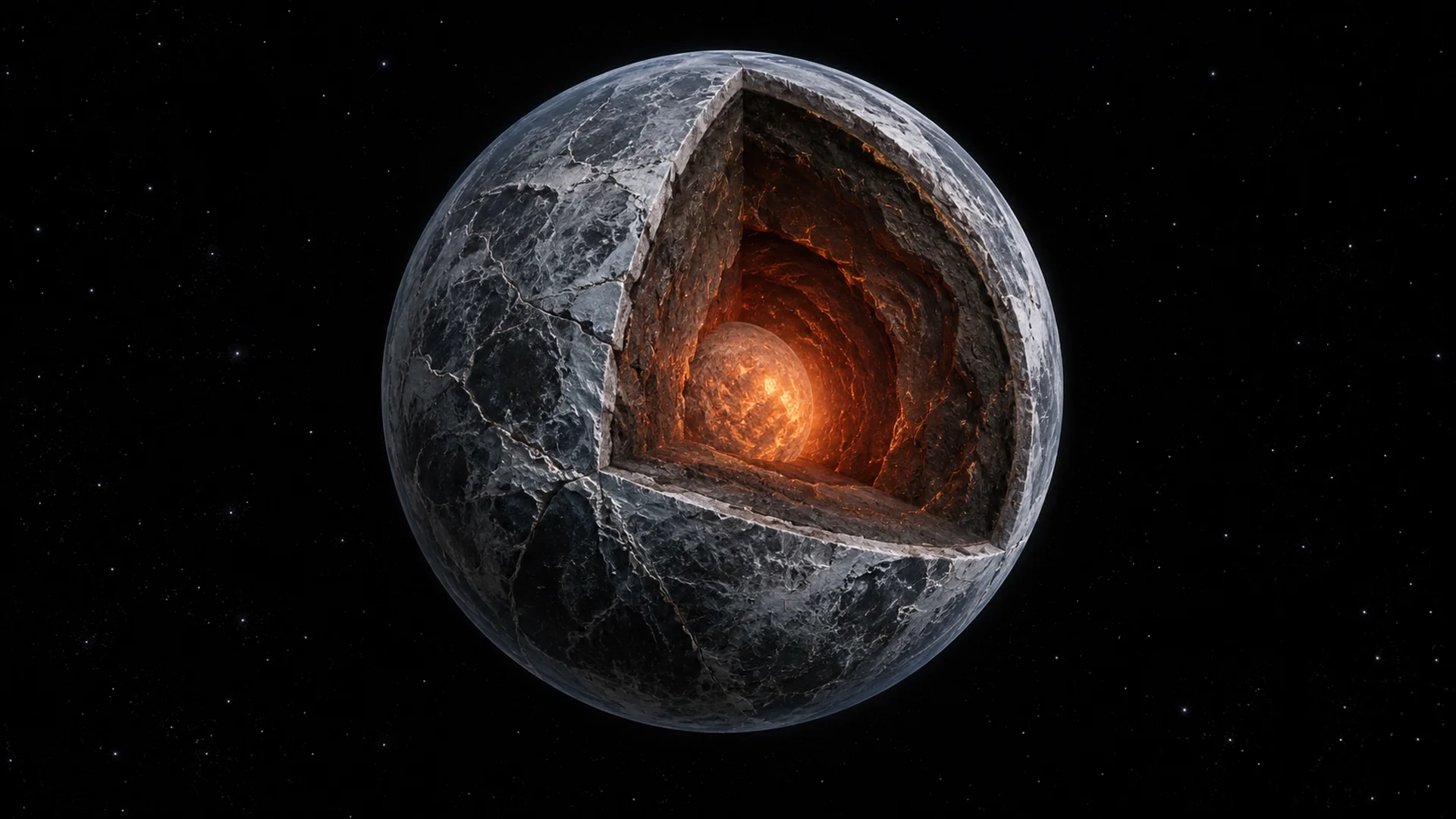
Losing its star does not erase all a planet’s heat. Some energy can linger from its formation; more can be produced as radioactive elements decay inside its rocks. That internal heat leaks toward the surface over time.
On Earth, hot springs and volcanic regions reveal some of these effects. On icy moons, tidal heating can also help maintain oceans beneath the ice. These examples show that a world can be cold outside and still have energy within, but they do not prove that an accessible heat source exists on every rogue planet.
Steam: a sign of heat, a terrible power socket
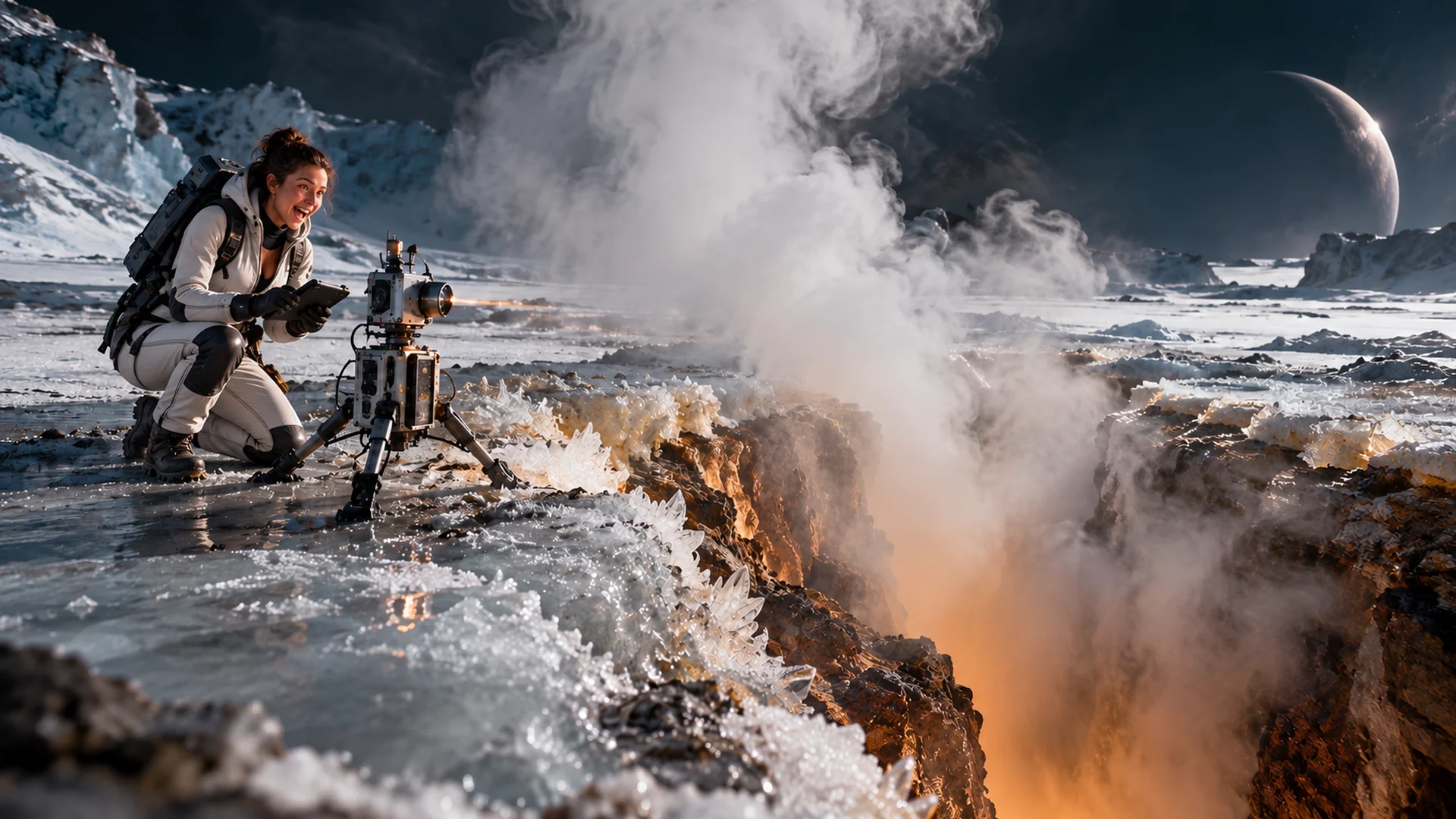
You find a frost-free strip, compare sensor readings, and approach a crack. Steam rises from it. That suggests local heat, but it does not answer the important questions: Is the fissure stable? Is the heat intense enough? Can you reach it without falling or damaging your suit?
Even if the source is geothermal, turning heat into electricity requires specialized equipment and a useful temperature difference. Without a machine to capture and convert that energy, steam will not recharge a battery out of kindness. With the right system, a heat source might help warm a shelter; without it, the vent is only a clue—and possibly a hazard.
The best shelter may not be the warmest spot
Building your shelter over the crack would be an efficient way to turn one problem into two. The fissure could be unstable, and getting too close adds risk. A cavity in the ridge, protected from the wind and away from fragile ground, may be the wiser choice.
Rock, ice, and a smaller enclosed space can reduce exposure and heat loss. Thermal blankets over gaps may not look heroic, but using less energy to keep a shelter warm is a real win when every watt matters.

An atmosphere could act like a blanket
There is a more ambitious possibility than a cave: a very thick atmosphere. Theoretical models explore whether a primordial layer rich in hydrogen and helium could trap some of a planet’s internal heat, keeping conditions suitable for liquid water for long periods. The result depends on the planet’s mass, composition, and amount of atmosphere.
That is a result from calculations, not the discovery of a habitable rogue planet. And liquid water does not mean breathable air, food, or a safe surface. An ocean hidden beneath kilometers of ice is not exactly an emergency swimming pool for a stranded astronaut.

So, could you survive?
Perhaps for a while, if you had shelter, enough power, life support, and a way to call for rescue. Internal heat could help if it were nearby and could be used safely. In some models, a thick atmosphere could preserve heat and even allow liquid water. None of those possibilities guarantees that an isolated explorer would survive.
The best strategy is less heroic than building a power plant from scratch: conserve energy, protect the suit, choose stable shelter, and treat every reading as a clue rather than a promise. Without a Sun, the most useful heat may be the heat you manage to keep from escaping.
Frequently asked questions
Has a habitable rogue planet been confirmed?
No. Theoretical studies examine conditions that could allow liquid water on some starless worlds, but that is not the same as confirming a habitable rogue planet.
Could heat from a fissure recharge the suit?
Not by itself. You would need a system that captures the heat and converts it into electricity. Without that equipment, the source is a clue or, with proper tools and care, a possible way to help warm a shelter.
Does liquid water mean there is life?
No. Water is only one possible condition. Life also depends on energy sources, suitable chemistry, and many other factors that would still need investigation.
Sources and references
- Nature Astronomy — Potential long-term habitable conditions on planets with primordial H–He atmospheres
- Nature — Life-sustaining planets in interstellar space?
- NASA — Some Icy Exoplanets May Have Habitable Oceans and Geysers
- Icarus — Free-floating planets as potential seats for aqueous and non-aqueous life